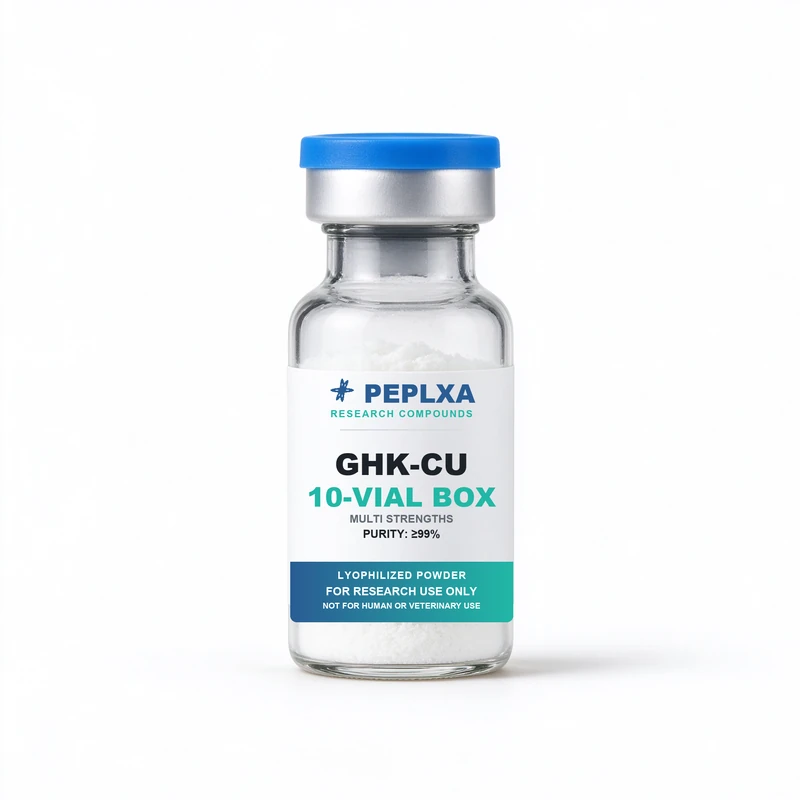
How to buy research peptides online in 2026: verify HPLC/ESI-MS batch records, read a COA, compare suppliers and source lyophilized compounds with confidence.
Buying research peptides online is convenient, but the catalog photograph is not the product. The product is the analytical record behind the vial. This guide explains what qualified laboratory buyers should verify before placing an order, how to read a Certificate of Analysis, and how Peplxa structures sourcing, testing and dispatch so every lot is independently verifiable.
Quick checklist. Before you buy, confirm: (1) independent HPLC purity testing per lot, (2) ESI-MS identity confirmation, (3) a batch-specific Certificate of Analysis you can actually open, (4) clear research-only labeling, (5) tracked, discreet and temperature-appropriate shipping, and (6) a supplier that answers documentation questions before payment.
What are research peptides?
Peptides are short chains of amino acids linked by peptide bonds. In a laboratory setting, synthetic lyophilized peptides are used as reference materials and tool compounds for in-vitro assays, analytical method development and mechanism studies. Everything listed on Peplxa is sold for in-vitro laboratory research only — it is not a drug, supplement or cosmetic, and no usage or dosing guidance is provided.
That research-only framing matters when you choose a supplier: a vendor that markets compounds for personal use, or that publishes dosing protocols, is not operating to a laboratory standard. Look for neutral, technical product language and strict eligibility terms instead.
What to verify before you buy research peptides online
1. Independent, batch-specific analytical testing
The single most important document is an analysis report generated for the specific lot you receive. A generic "99% purity" graphic on a homepage is not a Certificate of Analysis. Ask which methods were used, whether the laboratory is independent of the seller, and whether the report carries a lot number that matches your vial label.
2. Purity by HPLC and identity by mass spectrometry
Reverse-phase HPLC with UV detection measures chromatographic purity; electrospray ionization mass spectrometry (ESI-MS) confirms that the molecular weight matches the intended compound. The two answer different questions — how much of the target peak is present versus whether the molecule is actually the target. Peplxa's testing method uses reverse-phase HPLC (UV 214 nm) followed by ESI-MS in positive mode before release.
3. A Certificate of Analysis you can read before ordering
A credible supplier makes records easy to inspect. On Peplxa, the Lot Records page renders the HPLC trace and ESI-MS identity confirmation by compound name with no login and no support ticket. Institutional buyers can request full method packages after verification.
4. Endotoxin and contamination awareness
For cell-culture and sensitive assay work, ask whether endotoxin screening is available on request and how sterility is handled. Lyophilized material from a controlled environment, sealed under inert conditions, reduces the variables you have to control downstream.
5. Labeling, storage and fulfilment discipline
Labels should carry the compound name, lot number, quantity and a clear research-use statement. Sealed lyophilized vials should be stored frozen and protected from light; a supplier that understands cold-chain handling will describe packaging honestly rather than promising unnecessary overnight refrigeration for stable freeze-dried powder.
6. Transparent ordering and support
Qualified buyers should be able to get lead times, bulk pricing and documentation answers from a person. Peplxa replies to documentation and bulk inquiries within one business day, ships in plain packaging with a tracking number, and reviews wholesale accounts under KYC before first fulfillment.
How to read a peptide Certificate of Analysis
- Lot/batch number — must match the label on the vial you receive.
- Identity (MS) — observed molecular mass consistent with the theoretical mass of the target peptide.
- Purity (HPLC) — area-percent of the target peak, with the chromatogram attached rather than just a number.
- Appearance — lyophilized powder description (for example, white to off-white cake).
- Method and analyst — instrument conditions and a sign-off; independent laboratories carry more weight than in-house claims.
If a supplier provides only a percentage with no trace, no method and no lot reference, treat the claim as marketing, not data.
Price vs quality
Independent testing, mass-spectrometry confirmation and climate-controlled storage have real costs. Listings priced dramatically below the market average are usually cutting the one step that protects your work — batch-specific analysis. A cheap vial that fails identity confirmation wastes far more than the price difference in assay time and irreproducible results. Evaluate total cost: documented quality, fast replacement of lost or damaged parcels, and consistent supply across repeat orders.
The Peplxa ordering process
- Browse the catalog — over a hundred lyophilized research compounds across weight-loss metabolism, healing and repair, anti-aging, nootropic and other research categories.
- Verify the record — open Lot Records and inspect the HPLC/ESI-MS file for the compound before you order.
- Add to your inquiry list — select pack sizes and submit an inquiry; there is no pressured checkout, and payment is arranged against a clear quote.
- Receive and track — in-stock orders leave within 24 business hours in plain, tracked packaging, with cold-chain insulation where needed.
- Buy in volume — laboratories and institutions can request tiered bulk pricing; see the wholesale research peptides guide.
Popular research compounds buyers start with
Metabolic-research programs frequently source retatrutide, tirzepatide and related GLP-1 pathway tool compounds; healing and repair work commonly includes BPC-157; and dermal/cell-culture studies use GHK-Cu. Each product page links its category, specifications and the independent lot record. You can also browse the full research compound catalog.